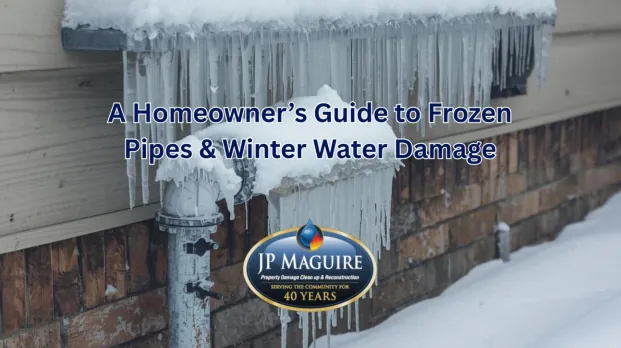
Water expands when it freezes, and that is the whole problem. A pipe that freezes can crack or burst, and you often do not find out until the ice thaws and water comes out fast: behind a wall, under a floor, through a ceiling. This is why pipes freeze, which ones are at risk, what it costs when it goes wrong, and what to do before the next cold snap. Do you know where your shutoff valve is if a pipe lets go tonight?
Why pipes freeze
Below 32 degrees the water inside a pipe freezes and expands, putting intense pressure on the pipe walls. The split usually happens somewhere you cannot see, behind an exterior wall, above a ceiling, under the slab. When the thaw comes, water runs out through that crack and the damage starts within minutes, which is why a frozen pipe is treated as urgent rather than annoying.
The pipes most at risk
Pipes in basements, attics, crawl spaces and unheated garages. Plumbing running along an exterior wall. Uninsulated pipes, or insulation that has slipped or collapsed. Buildings left vacant or underheated through a cold snap.
Warning signs
Little or no water from a faucet, frost on an exposed pipe, a strange odour from a drain, water stains on a ceiling or wall, and puddles or damp you cannot explain. Any of those means the pipe is already a problem, and acting the same day is what keeps it a repair instead of a rebuild.
How to reduce the risk
Keep the indoor temperature steady, overnight and when you are away. Insulate exposed pipes in the coldest parts of the house. Let faucets drip during severe cold, starting with the ones on exterior walls. Open the cabinet doors under sinks so warm air reaches the pipes. Shut the water off if a property will sit vacant for any length of time.
If a pipe does burst
Turn the water off at the main, then call. Water damages drywall, flooring, insulation and framing within minutes, and anything that stays wet starts growing mold, so extraction and drying are time-critical rather than cosmetic. JP Maguire handles water damage across Connecticut: 24/7 response, water extraction, structural drying, moisture detection to find what has wicked into the walls, mold prevention, and the rebuild afterwards, with help working through the insurance claim. Call 877-576-2484.
Where to go from here
If this is happening in your house right now, these are the pages Connecticut homeowners reach for, each one saying what the work involves and how to get a crew rolling: water damage restoration. Water extraction, drying, then the rebuild. fire damage restoration. Soot, smoke odour, and putting the rooms back. mold remediation. Finding it, containing it, and removing it properly. storm damage restoration. Wind damage, fallen trees, emergency tarping. burst pipe repair. Stopping the leak, then repairing what it reached. 24/7 emergency restoration. A person on the phone, any hour of the night.
Also from the blog: Does Your Homeowners Insurance Actually Cover Fire and Water Damage?, How to Stop Ice Dams Before They Leak Into Your House and More on water damage.