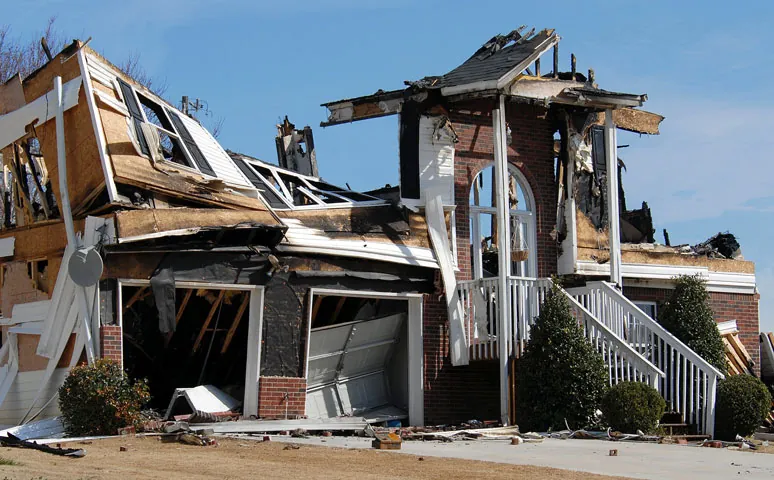
The fire is out, the trucks are pulling away, and you are standing on your own lawn looking at a house that used to be yours. What you do in the next 24 hours has more influence on your recovery, and on how much your insurance actually covers, than almost anything that happens afterward.
Soot is acidic. Within a day or two it starts etching glass, staining grout, corroding metal fixtures, and eating into circuit boards. The water the fire department used to put the fire out is still sitting in your walls and carpet, and it will start growing mold on the same timeline as any other water damage. Every hour of delay in this window turns a repair into a replacement.
1. Wait for the All-Clear
Do not go back inside until the fire department has told you it is structurally safe. A house that looks fine from the yard can have a compromised roof, a weakened floor, or live embers in the wall cavities. Smoke itself contains hazardous particles and gases that can still be dangerous well after the flames are gone.
2. Call Your Insurance Company Before You Call Anyone Else
Open the claim the same day. Get a claim number, write it down, and ask for the name and direct contact information of the adjuster who will be assigned to your file. Ask for a copy of your policy if you do not have one handy. Every conversation from this point forward is worth a note with the date and who you spoke to.
3. Board Up and Tarp Before You Clean Anything
Broken windows, a hole in the roof, or a door that will not close is an open invitation to weather, animals, and anyone walking by. Insurers expect this kind of mitigation, and most policies treat it as a non-negotiable step in protecting the claim, not an optional extra. This is also usually the point where you bring in an IICRC-certified restoration company, because board-up and documentation happen together: everything gets photographed before it gets touched.
4. Do Not Throw Anything Away Yet
It is tempting to start hauling ruined furniture to the curb. Don't, unless it is an active health hazard. Your adjuster needs to see the damage in place before it is discarded, and a missing item is much harder to claim than a photographed one.
5. Handle the Utilities and the Mortgage
Contact your gas, electric, and water utilities and have service suspended until the property has been inspected. Most lenders expect notification of a major loss within 48 hours, so put that call on the same list as the insurance call, not something you get to next week.
Why the First 24 to 48 Hours Matter So Much
The math on residential fire claims is not small. Insurers pay out billions annually in fire damage claims in the U.S., and a single claim averages in the tens of thousands of dollars once smoke, soot, and water damage from firefighting efforts are all accounted for. Professional cleanup started within the first day or two measurably reduces how much of that damage becomes permanent, which is the difference between restoring your home and rebuilding it.
JP Maguire Associates responds to fire damage across Connecticut around the clock. If you are standing outside your home right now, the call to make after the fire department and your insurer is to a restoration company that can board up, document, and start mitigation before the first night is over.